
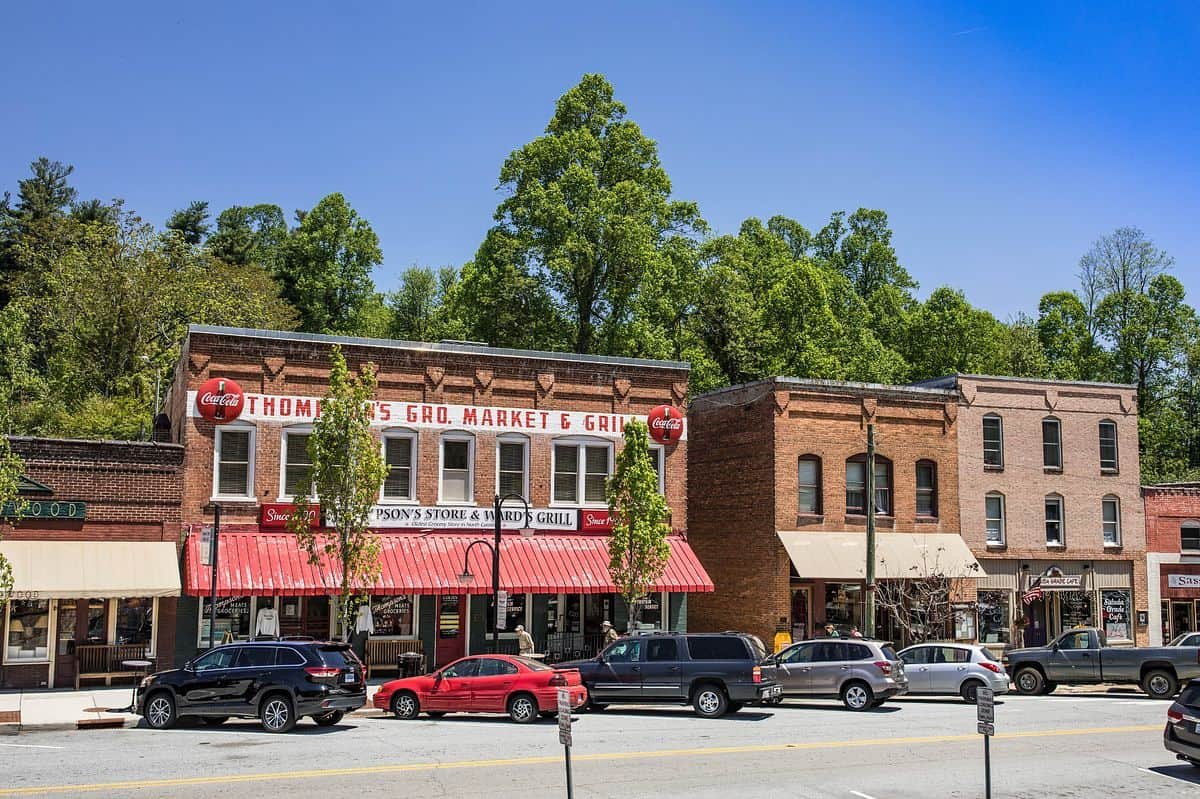
This post may contain affiliate links. We may receive a small commission, at no cost to you, if you make a purchase. Read Disclosure. They say good things come in small packages, and in North Carolina, this is most certainly the case. Some of the smallest towns in North Carolina can make the biggest impressions, often tucked between mountains, marshes, or windswept barrier islands. Since we moved to North Carolina, we’ve discovered so many small towns that wear their personalities proudly on their sleeve – most are a little quirky, deeply rooted in community, and refreshingly unpolished. Their populations may be less than 2,000 people, but they all seem to have a unique side hustle or a strong opinion – and plenty of time to talk about both. If you’re looking to get off the main tourist trail, hit the back roads, and discover some of the quaintest and yet most inspiring towns, these are the destinations to pin. From artsy mountain hamlets to riverfront mill towns to coastal villages, these small towns punch well above their weight. Come for a festival, a café, or just to escape the hustle and bustle of the city, and you’ll leave with a sense of community, peace, and a newfound love for the simpler things in life. Because in North Carolina, small doesn’t mean sleepy. 1. Brevard Credit: Visit NC Population: 7,973 (2024) Size: 5.36 sq mi (13.88 km2) Nestled at the entrance to the Pisgah National Forest in a county aptly nicknamed “Land of Waterfalls”, Brevard is a small town that’s abundant in quiet forests, hiking trails, rivers, and waterfalls, as well as small town charm. Though people come for the nature, people stay for the community. The streets are dotted with art galleries, boutique shops, cozy cafés, and artisan bakeries, with buskers standing on corners on weekends – probably students at the renowned Brevard Music Center. Credit: VisitNC What really makes Brevard a small town with big charm, however, is its annual festivals and traditions. The annual Brevard Music Center Summer Festival from June to mid-August and Mountain Song Festival in September draw thousands to witness world-class musicians taking the stage, while events like the White Squirrel Weekend Festival (yes, Brevard has white-colored squirrels) celebrate the town’s quirky side. Year-round, Brevard has a thriving arts scene with a Fourth Friday event and an up-and-coming craft beer scene. Be sure to visit The Hub and Pisgah Tavern, a bike shop and beer garden that sells craft beer from local breweries. 2. Edenton Credit: Visit NC Population: 4,492 (2024) Size: 5.57 sq mi (14.43 km2) The historic waterfront town of Edenton may be quaint with beautifully preserved homes, a scenic harbor overlooking the Albemarle Sound, and a peaceful downtown that feels like stepping back in time, but it is far from sleepy. Edenton is the First Colonial Capital of North Carolina, and is steeped in history and historic landmarks. Full of cobblestone streets, 18th-century homes, and quaint shops in the waterfront shopping district, the main reason to come to Edenton is for the history and coastal setting, but many people soon learn to stay for its vibe. Being a small and close-knit community, Edenton has learned to create its own fun. Throughout the year, cultural and community events and festivals turn this quiet haven into a lively hubbub of activity. In October, the annual Edenton Tea Party Festival celebrates the town’s Revolutionary roots with parades, reenactments, and family-friendly activities, while events like the Edenton Bay Seafood Festival bring the region’s coastal delicacy to the plate. Whether it’s attending a farmer’s market or a trivia night in a downtown wine shop, Edenton’s events calendar is packed all year round. 3. Beaufort Population: 4,895 (2024) Size: 7.84 sq mi (20.31 km2) One of our favorite coastal towns is the charming historic town of Beaufort on NC’s Crystal Coast. This small and relaxed town is brimming with historic architecture and relaxed vibes, earning it the title of one of the “Best Small Towns in America” for adventure by USA Today. Beaufort may have a population of just under 5,000, but it brims with character and history, most notably being the place where the infamous pirate, Blackbeard, once stayed. Kayaking with wild horses | hiking Fort Macon Its quaint shops, cozy cafés, seafood restaurants, and art galleries make wandering the town a pleasure, or if you love the outdoors, you can kayak across the sound to Rachel Carson Coastal Estuarine Reserve for a glimpse of wild horses, or cross over to Fort Macon State Park for a hike. Whether you want chilled out days sitting on porches with a good book or you want to get out and explore the town’s maritime and pirate heritage, Beaufort has so much to offer. Read more: Fun Things to do in Beaufort, NC: a Pirate Town of Many Treasures and here is 36 hours in Beaufort itinerary guide. 4. Hillsborough Population: 9,773 (2024) Size: 5.66 sq mi (14.67 km2) The quaint river town of Hillsborough has seen a boom in residents over recent years, but it still remains sparsely populated with fewer than 10,000 people. What’s attracted people to Hillsborough is its historic tree-lined downtown filled with historic colonial buildings that contain boutique shops and family-owned eateries, as well as its thriving arts scene. Hillsborough’s connection to art is what makes it a small town with a big personality. In downtown, the Hillsborough Gallery of Arts displays works by 21 local artists, and The Eno Arts Mill is a multi-purpose space where artists work. There’s a Last Friday and Art Walk event hosted by The Hillsborough Arts Council, which features gallery exhibitions, poetry readings, and more throughout March – October, and the annual Handmade Parade in April transforms the town into a lively celebration of creativity. No matter what time of year you visit, art is everywhere in Hillsborough, making it one of the most charming and creative small towns in North Carolina. The small town itself is charming
21 Best Places to Visit in December in the USA (2025 Edition)
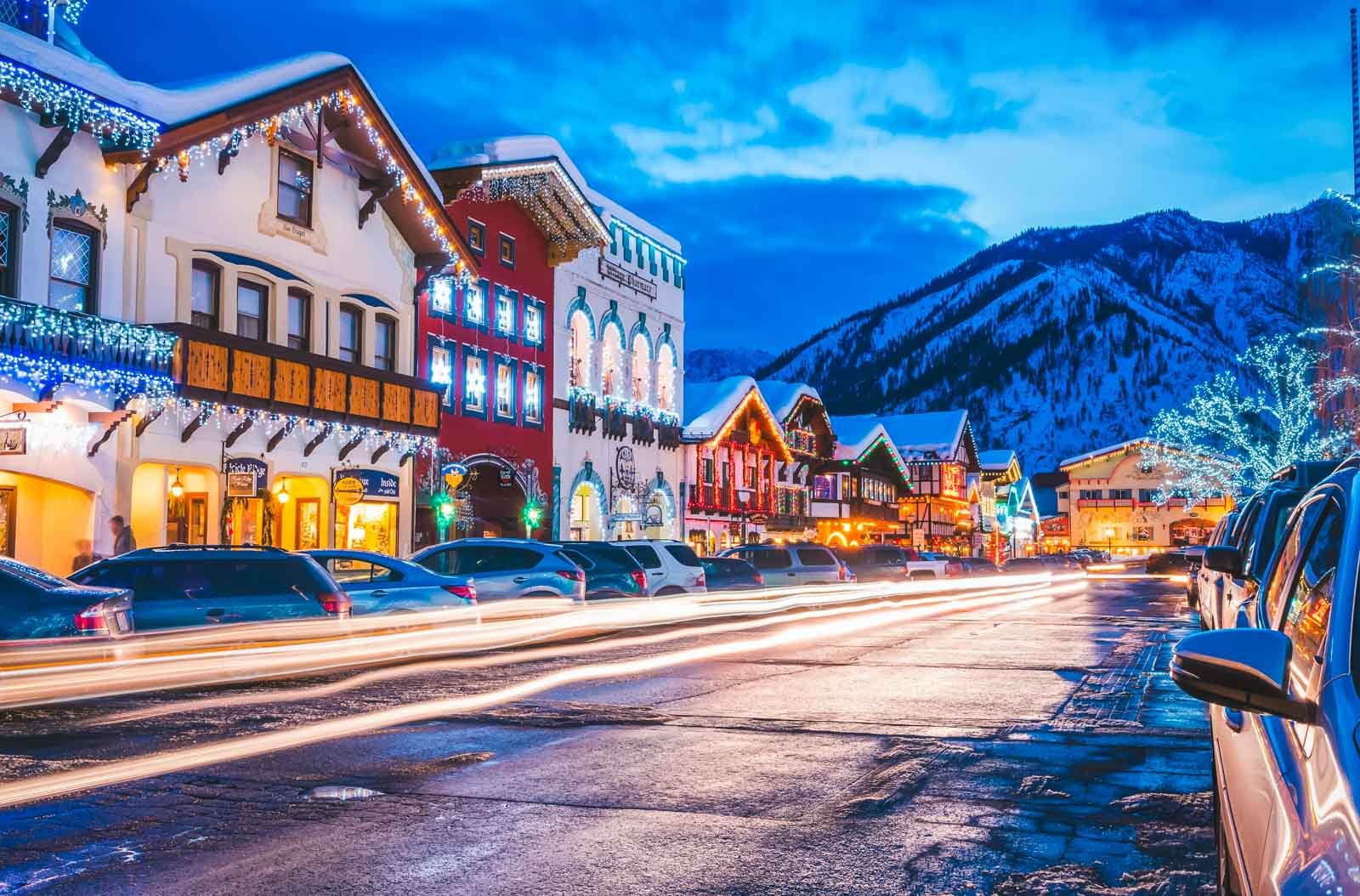
We’ll never forget the first time we visited New York City in December. We’d seen it in movies, but standing there, seeing the Rockefeller Center tree all lit up for the first time, with skaters below and festive music in the air… it was pure magic. But December travel isn’t just about snow and Santa. We’ve also spent the holidays escaping to the warmth, trading snow boots for flip-flops. In fact, we’ve been to almost all 50 states and spent a lot of winters trying to find the most fun destinations and best weather. We’ve done so many road trips in the USA and flown almost everywhere, trying to find the best places to either escape the snow or enjoy the winter, you would think we are obsessed. And we want to share all of that knowledge with you. If you’re looking for the perfect winter getaway, you have a clear choice: either lean into the winter magic or escape it completely. Are you dreaming of a warm-weather escape with sunshine and sand, or a storybook Christmas town that looks like a real-life snow globe? Based on all those experiences, we’ve put together this list of our favourite places to visit. Whether you’re looking for a festive city, a snowy mountain, or a sunny beach, we’ll help you find the perfect spot. Quick List: Best Places to Visit in December in the USA Here is a quick look at some of the best places for a December getaway in the USA, from festive winter wonderlands to sunny escapes. New York City, New York: The ultimate festive city experience. Leavenworth, Washington: A real-life Bavarian Christmas village. Key West, Florida: Laid-back island life and sunshine. Aspen, Colorado: World-class skiing and a magical mountain town. Maui, Hawaii: The perfect warm-weather escape to see humpback whales. Asheville, North Carolina: Festive lights at the Biltmore Estate. St. Augustine, Florida: Taking in the “Nights of Lights” display. Scottsdale, Arizona: Sunny desert hikes and relaxation. Park City, Utah: A historic ski town with holiday charm. New Orleans, Louisiana: Creole Christmas traditions and great food. Solvang, California: A unique Danish-style Julefest celebration. Why Travel to the USA in December? December is a month of pure magic and festive energy. It’s the perfect time to use up that last bit of vacation time for the year. The biggest draw is the distinct choice it offers: You can either dive head-first into a winter wonderland, complete with snow and holiday markets, or you can completely escape the cold weather and find yourself on a sunny beach. It’s a month of festive celebrations, incredible decorations, and finding the perfect atmosphere to end the year. Best Warm Places to Visit in December in the USA If you’re anything like us, sometimes the best gift in December is a break from the cold. Trust us, we know after living in Toronto, Canada. Those winters are brutal. These are our favourite spots to find sunshine and warm weather, where you can trade your winter coat for a light jacket or even a swimsuit. 1. Key West, Florida We love the laid-back, quirky vibe of Key West, and it’s even more special in December. We have a great memory of biking around the island, seeing the historic inns draped in holiday lights, and then ending the day at Mallory Square for the sunset celebration. It’s a perfect escape from the cold. Why Visit in December: This is the perfect time to visit. The summer humidity is gone, the weather is sunny and warm (often in the high 70s), and the risk of hurricanes is very low. The whole island is in a festive spirit, with unique events like the “Bight Before Christmas” boat parade. Top Things to Do: Watch the “Bight Before Christmas” lighted boat parade. Take a ride on the Conch Train to see the historic homes decorated for the holidays. Visit the Southernmost Point in the continental US for a classic photo op. Go on a sunset sail to enjoy the view from the water. Where to Stay: We recommend finding a guesthouse or inn in the historic Old Town to be close to the action. 2. Maui, Hawaii We once went to a holiday luau in Ka’anapali, and it’s an experience we’ll never forget. You’re eating kalua pork and sipping a mai tai, watching a beautiful hula performance… and then Santa Claus arrives on an outrigger canoe. It was the perfect, uniquely Hawaiian way to get into the festive spirit. Why Visit in December: You get tropical weather, festive holiday luaus, and it’s the official start of the humpback whale watching season. Be aware that this is a popular time, especially around Christmas, so prices can be high and you’ll need to book in advance. Top Things to Do: Go on a whale watching tour to see the humpbacks arrive for the season. Attend a festive Christmas luau, where Santa sometimes arrives in a red canoe. Browse the holiday markets at Whalers Village in Ka’anapali. Drive the Road to Hana to see the waterfalls, which are often fuller in the winter. Where to Stay: Look to the resorts in Wailea or Ka’anapali for a classic Maui experience. 3. U.S. Virgin Islands (St. Thomas / St. John) We’ll always remember snorkeling the underwater trail at Trunk Bay in St. John. The water was so calm and clear, and seeing all the colourful fish felt a world away from the snow back home. That’s the magic of a Caribbean trip in December, and the USVI makes it so easy for American travelers. Why Visit in December: It’s the start of the dry season, with fantastic weather and warm, clear water. You get a full-on tropical, warm-weather Christmas experience, all without needing a passport. Top Things to Do: Snorkel the famous underwater trail at Trunk Bay, St. John. Relax on the world-famous white sands of Magens Bay in St. Thomas. Explore the Annaberg Sugar Plantation ruins in St. John. Enjoy the unique “Christmas Second
Doors-Off Helicopter Tour Of Kauai: My Review & Photos
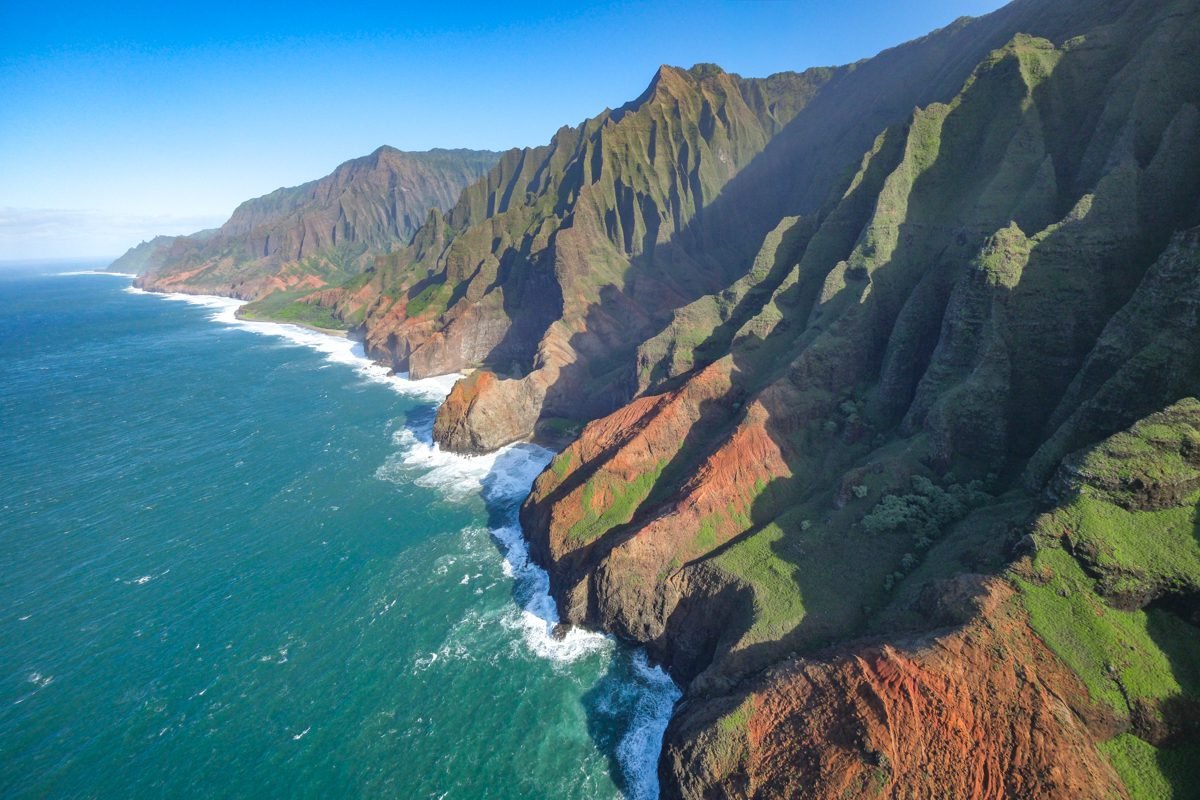
75 The Na Pali coast on Kauai is probably the most beautiful coastline in the world, and there’s no better way to see it than by air. I’ve always wanted to fly over Kauai in a helicopter with the doors off, and last week it finally happened! I joined Jack Harter Helicopters on a 1 hour scenic flight around the island and took hundreds of photos. It was an amazing experience, and I have to say I was impressed with the whole tour from start to finish. It was even better than I expected. In this review, I’ll explain everything you need to know about the Kauai scenic flights, including the prices, safety, and what to expect when you’re in the air. I’ll also share some of the pictures I took on my own flight! Kauai looks amazing from above The Company: Jack Harter Helicopters I did my flight with Jack Harter Helicopters, a company that dates back to 1975 on Kauai. Today, there are lots of companies offering helicopter tours on Kauai, but Jack started the first company on the island. They also pioneered the idea of doors-off tours for better views and photography without any windows in the way. You can read more of their history here. It’s very interesting. Disclosure: I received a free flight from Jack Harter in exchange for an honest review. All opinions are my own. I only recommend products and services that I feel are high quality and helpful to my readers. Epic views of the Na Pali coast Kauai Scenic Flight: What To Expect My tour started with a quick check-in at the Jack Harter office in Lihue, followed by a 5 minute minivan transfer to the airport with a group of other passengers. There, we had a safety briefing with some tips about how to work the seatbelts in case of an emergency, and then we were divided into two groups. Jack Harter seats four passengers on each flight, with two passengers in the front with the pilot, and two in the rear. The passenger in the front middle seat might have to lean over to take pictures, but aside from that, you’ll all have window seats. Ke’e Beach at Haena State Park Our tour used the MD500E helicopter Everyone has a good view of the action, so don’t worry about your seat assignment too much. The helicopter even circles and hovers over some of the best photo spots, so everyone has a chance to take pictures. Our group flew with Chrissy Marsaglia, a female pilot from NYC who’s done the tour thousands of times. She was a good communicator and you could tell she’s very comfortable with flying. She explained each of the sights as we went. We circled the island in a clockwise direction, and here are some of the things I saw: Manawaiopuna Falls. The 400-foot waterfall used in one of the opening scenes of Jurassic Park. Waimea Canyon. The Grand Canyon of the Pacific, with sections up to 3,000 feet deep. If you’ve been to the state park by car, then it’s really a treat to see it up close from a different angle. Waipo’o Falls. A multi-tiered waterfall in Waimea Canyon. This is the same waterfall you may have seen from the pull-off spots along the road in the state park. Na Pali Coast. This was one of the tour highlights. We had plenty of time to see all the main landmarks of the Na Pali coast, like the Kalalau Valley and Honopu Beach. North Shore. We passed over some great beaches on the North Shore, including Ke’e and Hanalei Bay. Mt Waialeale. An extinct volcanic mountain in the heart of the island. It has a ‘weeping wall’ of waterfalls that come alive after rain. The mountains at Haena State Park Sometimes the tours also fly over Wailua Falls, a popular twin waterfall on the east side of Kauai. Overall, the best part of the tour for me was the Na Pali coast. It’s probably the most impressive coastline in the world, and seeing those huge cliffs from above was just incredible. If you’ve ever hiked the Kalalau Trail, or have plans to do that, then it’s extra special seeing it from this new angle and knowing you’ve hiked along the edge of those mountains and camped at the beach. Steep spires and ridges at Kalalau One of the nice things about Jack Harter is that their tours run for a full 60-65 minutes, compared to 45-50 minutes with other companies on the island. I clocked our flight at a little over 65 minutes, from the moment we climbed into the helicopter, to when we stepped out. Even with the longer flight time, the whole thing is such a thrill it goes by fast! Red rock formations at Waimea Canyon When Is The Best Time To Fly? As a photographer, I spent a lot of time trying to figure out the best time to do a helicopter flight on Kauai. In general, the driest and sunniest months are from April to October. This would be the perfect time to do a helicopter tour of the island. The rainy season is basically from November to March, and it tends to be especially wet in January and February. However, these months can still be just fine for a helicopter tour. I’ve visited Kauai in the rainy season several times, and most days tend to have calm and sunny weather. The photos in this article were taken in January, and the weather was phenomenal, so don’t write it off. Having the doors off feels like you’re right in the action Any time of day is good for flying, and there’s no ‘best’ time slot unless you’re a photographer. Even then, the differences are pretty minor from hour to hour. In the winter, afternoon or evening is best if you’re a photographer wanting to capture the Na Pali coast by helicopter. That’s when
The 8 Best Airbnb Experiences in Tokyo
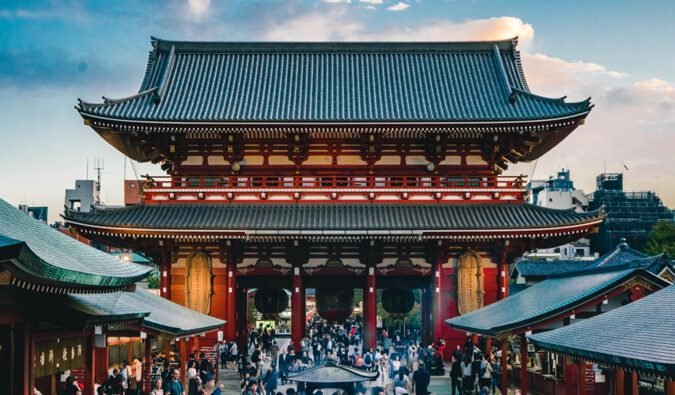
Tokyo is one of those cities that feels endlessly deep. You can visit a dozen times and still discover new food stalls, hidden shrines, late-night bars, quirky subcultures, and neighborhoods that feel like completely different worlds. (I know because I’ve visited about 10 times already!) One of my favorite ways to explore Tokyo is by taking an Airbnb Experience. Led by locals and long-term residents, these tours give you a front-row seat to Tokyo’s food culture, nightlife, history, and crafts in a way you rarely get when wandering on your own. I’ve done a lot of Airbnb Experiences in Tokyo over the years and think they are often even better than traditional tours you find on Get Your Guide (though Arigato Travel is next level and the best traditional tour company in the city so don’t miss out on them). To help you pick from the endless Experiences you can find, below are my favorite in Tokyo that combine cultural immersion, hands-on learning, and just the right amount of fun: Learn to Make Authentic Sushi with a Trained Chef Sushi-making classes are common in Tokyo but this Airbnb Experience stands out because it’s done in an omakase restaurant. This class is given by a sushi master (or his apprentice). You don’t just learn how to shape rice or slice fish; you learn why certain cuts matter, how chefs season rice differently depending on style, and how to pair ingredients to highlight texture and flavor. The class is hands-on and surprisingly approachable. It’s a small group experience done in the morning so you can have a filling and fun breakfast experience before going out to explore Tokyo. I absolutely loved it. Book here! Shibuya Nightlife with Unlimited Drinks This is my favorite nightlife tour in Tokyo. The host, Suemi, and her friends provide the absolute best time. This Shibuya nightlife tour one takes you to 3-4 izakaya spots that are very untouristy and filled without locals. You get unlimited food and drinks and it’s a really great experience. My guide, Shugo, was outgoing, spoke conversational English, handled large group dynamics well, was entertaining, explained the culture of izakaya restaurants in detail, and stayed past when the Experienced ended. He was great! Additionally, Suemi and her friends also run an unlimited Sake tasting class, which is the best Sake class I’ve done in Tokyo. They go into incredible detail about how sake is made and use a lot of visuals so it’s really easy to understand. It’s a small group of six, which made the Experience really personable. If you take a Sake experience, take this one. (They also un a whiskey tasting experience that I haven’t done this one yet but I bet it’s just as good). Book here! Shinjuku Izakaya Tour This experience is similar in spirit to the Shibuya nightlife tour but set in one of Tokyo’s other major nightlife hubs. Shinjuku is packed with tiny izakaya spots, many of them hidden in narrow alleyways or upstairs spaces you’d never think to enter on your own. On this tour, Yuma (a knowledgeable sake sommelier) takes you to several of these small, local spots and walks you through how izakaya culture really works. You’ll try different styles of sake along the way and learn how to read menus, what to order, and how locals typically drink and eat in these settings. Yuma is outgoing, fun, and very good at explaining things clearly without overwhelming you. It’s social, relaxed, and a great way to experience Shinjuku nightlife without feeling lost or intimidated. Book here! Historic Tokyo Walking Tour This is one of the most educational experiences I’ve done in Tokyo. Instead of focusing on the usual tourist areas, this tour explores quieter neighborhoods that retain a strong connection to the city’s past. The host is a lecturer specializing in Japanese history and traditional culture, and it really shows in the depth of information shared throughout the walk. You’ll visit places like Nezu Shrine, walk through its tunnel of red torii gates, explore the old streets of Yanaka, and learn about the Edo period, the Meiji Restoration, and how the role of the samurai changed as Japan modernized. It’s a 2.5-hour walk that never feels rushed and gives you a much clearer understanding of how Tokyo became the city it is today. I learned a lot from this tour. Book here! Tokyo Coffee Culture Tour Tokyo has an burgeoning coffee scene and this tour does a great job of showing it to you. You explore Jimbocho and Kanda, two very under visited neighborhoods, to learn about both old-school kissaten and modern specialty cafés. You’ll learn about brewing techniques, flavor profiles, and how Japan developed such a meticulous approach to coffee. The tour includes visits to historic cafés, specialty shops leading Tokyo’s third-wave movement, and even wagashi shops where you’ll learn how traditional Japanese sweets pair with coffee. It’s a really thoughtful and unique afternoon experience. Book here! Organic matcha Tea Ceremony This one-hour experience is a great introduction to matcha and Japanese tea culture. You’ll learn about the history of matcha, its role in Japanese society, and how to tell high-quality matcha from lower-grade varieties. The host walks you through the traditional preparation process step by step. You’ll whisk and taste authentic matcha in a calm, traditional setting that feels worlds away from Tokyo’s busy streets. It’s short but memorable, and it gives you a much deeper appreciation for something you’ll see everywhere while traveling in Japan. Book here! Tokyo Ramen Tour Ramen is synonymous with Japanese food, and this tour helps you understand why it inspires such devotion. Over the course of about three hours, you’ll visit multiple ramen shops, each highlighting a different style or approach.You’ll learn about ramen’s origins, modern trends, and regional variations while tasting everything from classic bowls to more experimental or fusion styles. The guide explains broth types, noodle textures, and toppings in a way that’s easy to follow. Come hungry as this tour will

How I Got My Visa to France
I’ve been in love with France ever since my first trip to Bordeaux in 2010. Friends I had met back in Thailand showed me around the area and introduced me to French culture. It was my first time in France and I loved the food, the wine, and the people. But that love became an obsession when, after Bordeaux, I stepped out of the Paris metro and onto the Champs Élysées. The lights, the energy, the mystique! There was magic in the air. I felt like I had known the city my entire life and I was simply returning home. Since then, Paris has had a firm grip on my heart. Over the years, I spent countless visits exploring France and Paris in particular. I’ve run tours in the city and I spent a few months living there in 2019. Last August, after yet another sojourn, I thought to myself, “What if I moved back?” I was growing a bit tired of the NYC dating scene, the rising cost of living, and felt like creatively, I was in a rut. With AI coming for creators like me and the industry changing, I was a little lost on what, career wise, would come next. In short, I needed a change. And Paris seemed like the best place to go. It’s cheaper than NYC, I had friends there already, I’ve always wanted to learn French, it would make a great base for exploring Europe, and I could start writing my next book there. There’s nothing like a change in scenery to get the creativity flowing! But the question remained: how do you move to France? After all, they don’t have a digital nomad visa, and you’re limited to three months if you visit on your regular Schengen tourist visa. Well, it turns out that it’s not actually that hard. (And while I can only speak for Americans, I suspect the criteria are similar for Canadians, Aussies, Kiwis, and other “developed” nations.) If you want to move to France, you have four main options: Student visa Long-term visitor visa Entrepreneur Talent visa The student visa is pretty straightforward. You need to enroll in a full-time university program and show you have enough funds to support yourself (around 600 Euros per month). A friend is currently there on this visa, as she is doing a nine-month intensive French program to become fluent. You still have to apply for the visa, but if you’re enrolled in an accredited school, you’ll likely get approved. Another benefit to this visa is that you can work part-time on it! But this visa is contingent on being in school, so if you leave or quit, it’s voided. However, when you are done, you can change this to a “job seekers” visa, which can give you up to another six months in France (or more depending on how long your program was). I thought about applying for the entrepreneur visa, but the application process is pretty complex and can take months to be approved. You have to set up your business in France — and that is a lot of paperwork. You have to show that your business makes money, has clients (at least one of them being French), and can support you full time (you have to make at least the French minimum wage). They will scrutinize your assets and financials a lot and you’ll need to register your business in France and pay French taxes. Additionally, France offers a talent visa. If you’re an expert in your field (with verifiable accreditations and accolades), this could be a good visa to apply for, especially if you plan to stay in France for a long time and want to physically work there. But, again, you’ll need to have some source of income and plan to do physical business in the France. If you’re not an academic but someone in the arts, you have to show how you are going to add to the “culture of France” in some way. While I would meet the requirements for both those visas, the process for either would have been time consuming, and, since I’m not sure France is going to be my forever home, I decided not to go through that process. So I went with the long-term visitor visa, officially called VLS-TS visiteur. This allows me to stay up to 12 months in France and is renewable in the country. It does come with a lot of restrictions, however: I can’t physically work here and I am not allowed into the French social welfare system. It’s also the visa a lot of Americans (and most retirees) are coming in on. If you have passive income or retirement savings and just want to live in France, this is a good option for you. It allows you to set up a bank account and it can be renewed pretty much indefinitely. The paperwork for this visa (which I’ll get into in a bit) essentially comes down to whether or not you can support yourself. French authorities want to make sure you won’t be a burden on the system. My biggest question centered around whether or not I could “work” on this visa. A lot creators and digital nomads are applying for — and getting — this visa. But remember: you aren’t allowed to work on this visa so how are you going to work if you can’t work? So let me take a moment to talk about “work” from a legal standpoint. As I mentioned, there’s no digital nomad visa that allows you to work in France. And the French tax office said last July that remote work is considered taxable — but there are no official laws that. That’s just their opinion and there’s been no progress in codifying that opinion. In fact, my visa doesn’t even come with a tax number, so it’s impossible for me to be taxed. I couldn’t pay taxes even if I wanted to. The visa office